
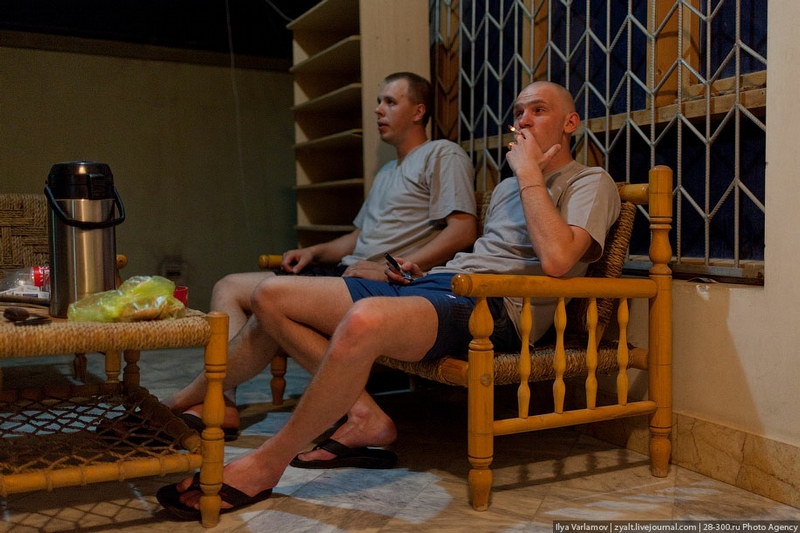
The hotel in the city of Mazar-i-Sharif.
These Russian guys are UN contractors. They fly and maintain helicopters. Their mission here lasts 4 months but almost all of the time they spend in the hotel – to go out of the gate is forbidden. Very dangerous. The guys get 150.000 rubles (about $ 5.350) monthly. They like the hotel they live in. "Until yesterday the conditioner in our room was broken and at night it was really hot – 35 C. Now it's repaired, the temperature is ok, 29 C. Basically, here we have everything we need – food is served, clothes are washed, we sleep in comfortable beds and use the Internet."

As for the heat, the guys are right, it's unbearable. In daytime the temperature reaches 50. When you open a car window, it seems like a hairdryer blows on you with hot air. But if you close it, you can simply suffocate. Cars with air conditioning are rare.
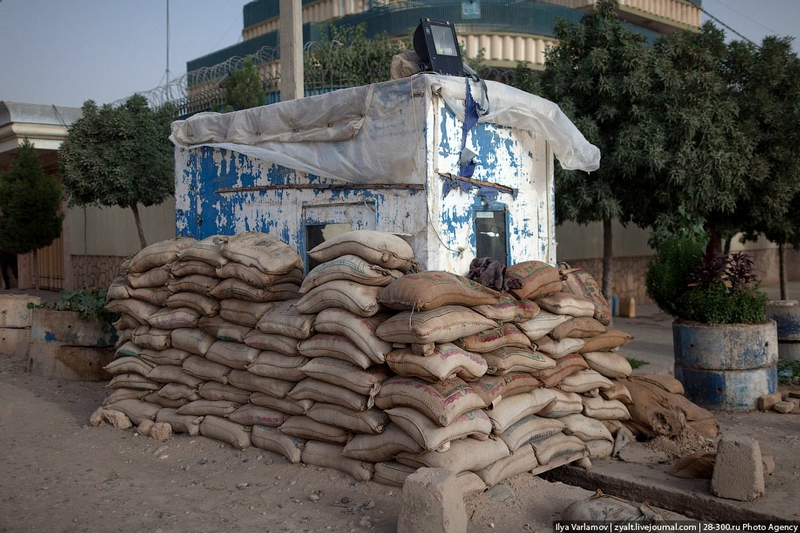
A reception desk. As we already wrote, foreigners are treated not very well here, so all the places where white people live are well guarded.

6 a.m, children play soccer in a small dust storm.
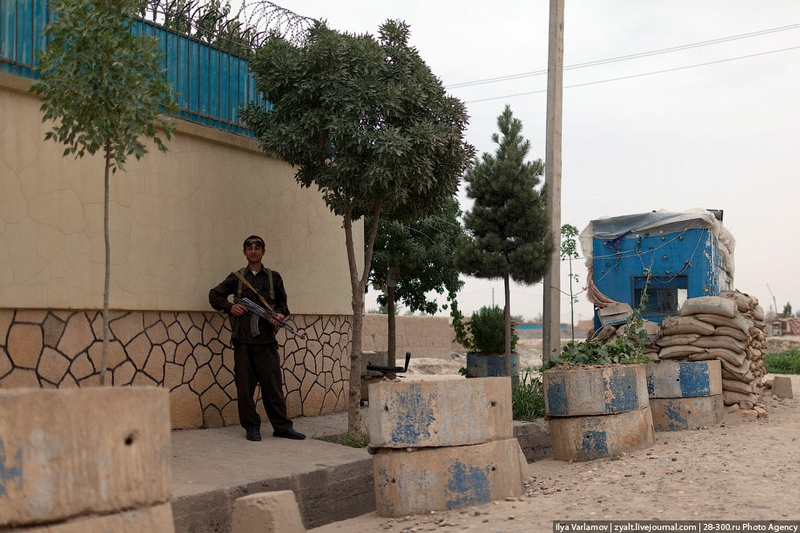
The guard of the hotel.

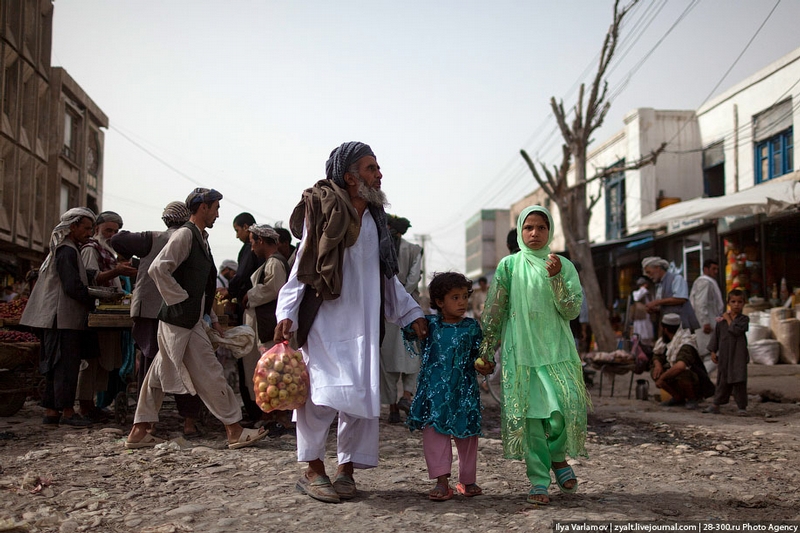
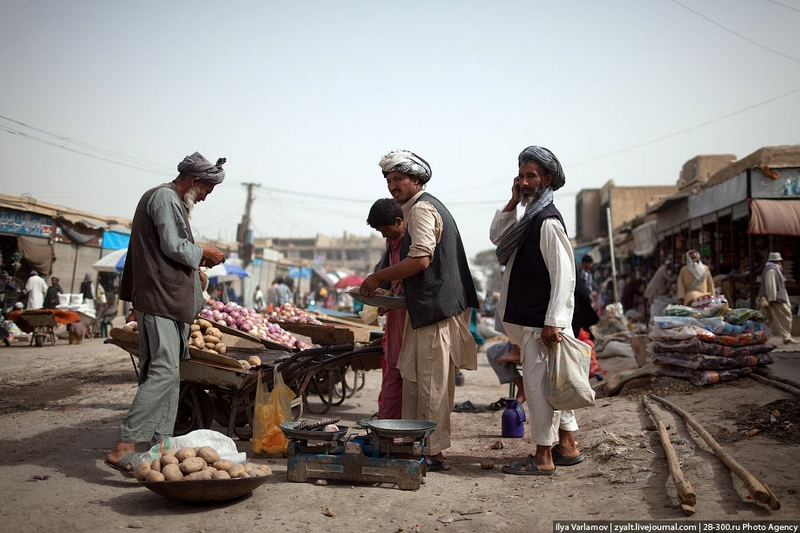
The local market is very colorful and looks like those of the Middle Ages. A perfect place for shooting historical films. There is no central sewage system in the city, but there are gutters along the streets in which all the wastes and garbage are thrown in. The stench is terrible.



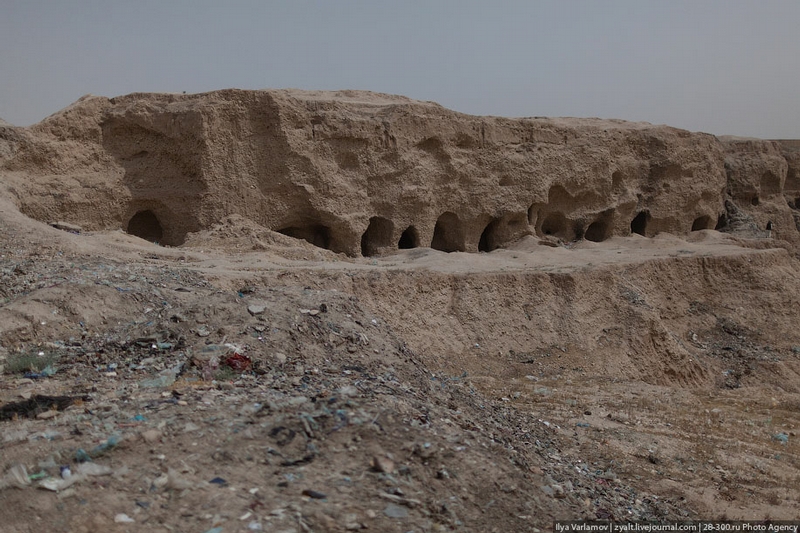
The city dump is huge, smelly and very beautiful! Look, what wonderful caves in the slopes! Let's see who lives in there…

Drug addicts…
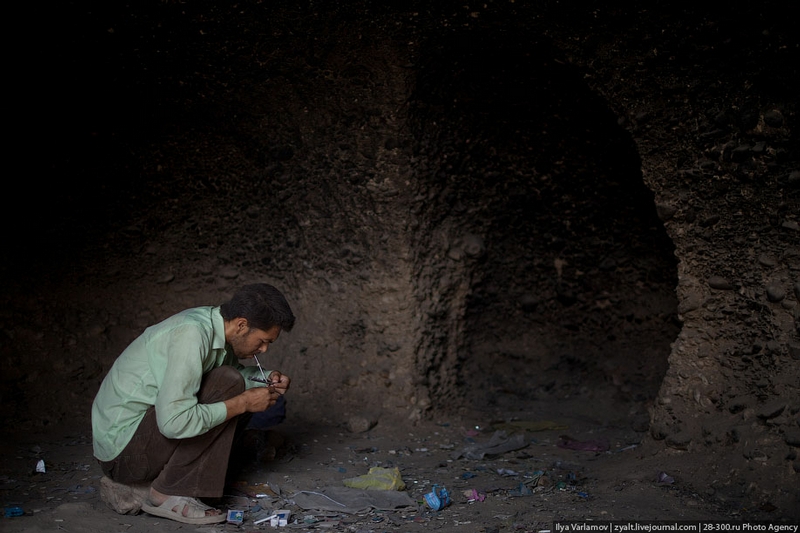
About 100 drug addicts constantly hang about in these caves. Here they use heroin. But, in contrast to Kabul junkies, these ones are very friendly and ready to communicate.

A dose of heroin in Afghanistan costs only $ 2. It's as much as a tin of RedBull or a ripe watermelon. A kilogram of heroin will cost $ 2.000. By the way, the local addicts prefer smoking heroin rather than injecting. It is heated on foil and inhaled through a straw.

One of the addicts' name is Masi. He has been using heroin for more than 20 years. When the Taliban came to power, his family fled from Afghanistan to Moscow. Masi entered Moscow State University but couldn't finish his studies – in the 90′s Germany conducted a program of repatriation of the Germans living in the former Soviet Union and Masi's parents somehow convinced the authorities that they were German and emigrated to Germany.
The family settled in the new place. Masi gradually taught German, but his friends still remained the expatriate Soviets. One of them, an Uzbek, hooked him on heroin. After a few drives to the police, it turned out that he was in the country illegally and was sent home – to Afghanistan. The family, however, stayed in Germany.
Now he has neither a job, nor any prospects to get it. He lives in a cave on a garbage heap, and his only source of income – 200 euros sent by his parents every month.

This guy has just used a dose and now tries to stay on his uncontrollable feet.
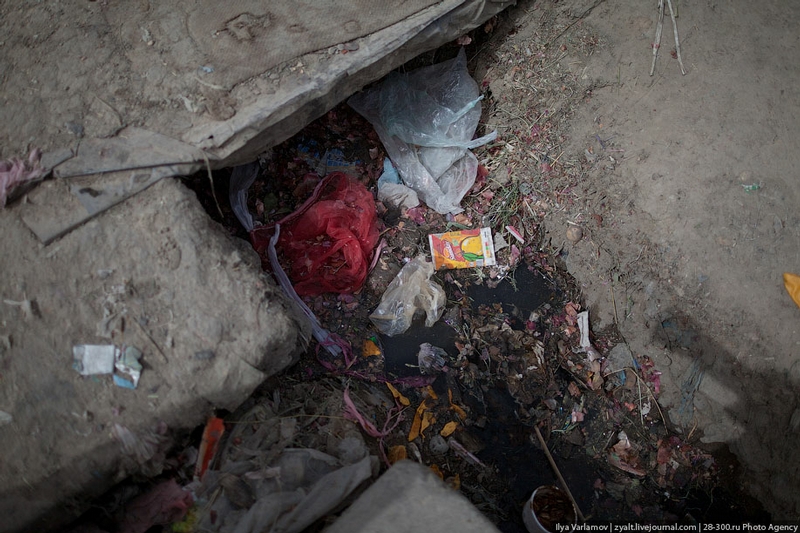
That's how the stinking gutters that run along all the streets of the city look.
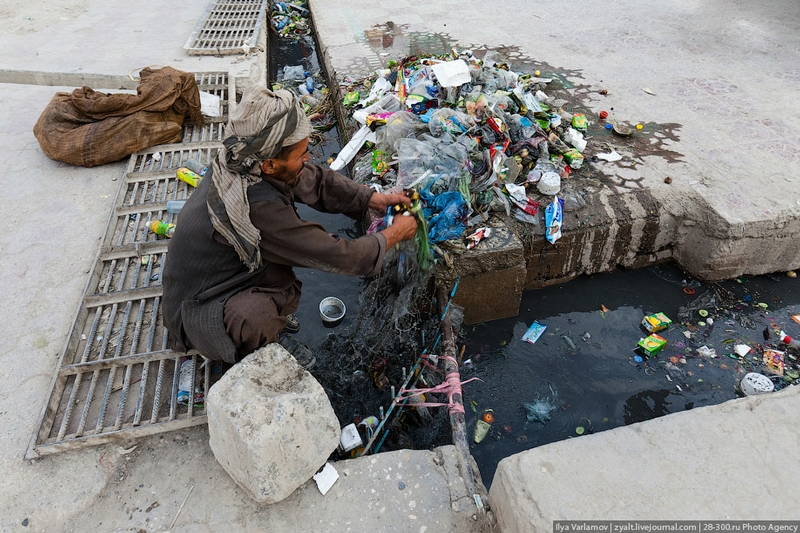
There are special people who sometimes clear them. Look how much rubbish this man got out of only one corner. The water is completely black and similar in consistency to oil.

In some places the water isn't very dirty, and kids bathe there with great pleasure!
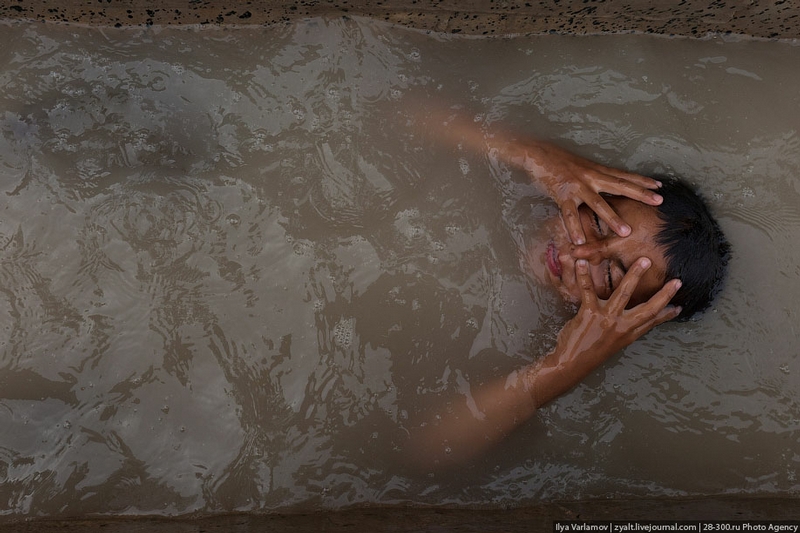
Not thinking of typhoid and cholera that now are spreading all over the city…

Women.
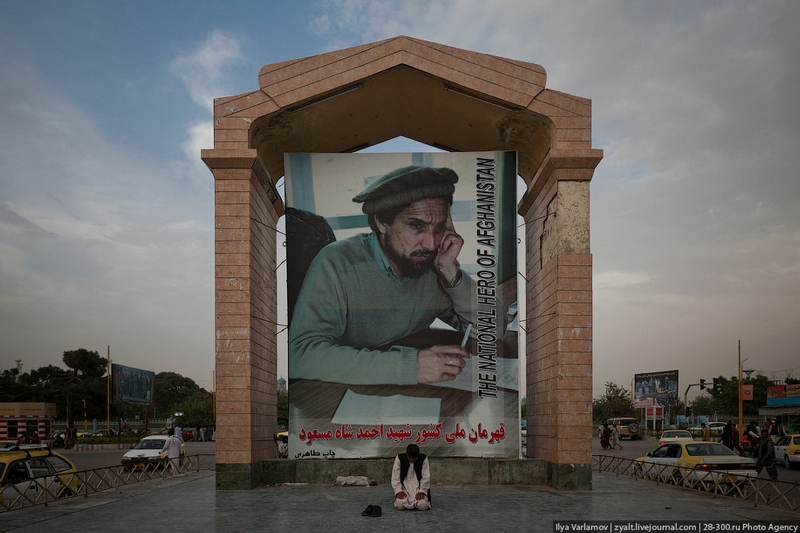
The hero.
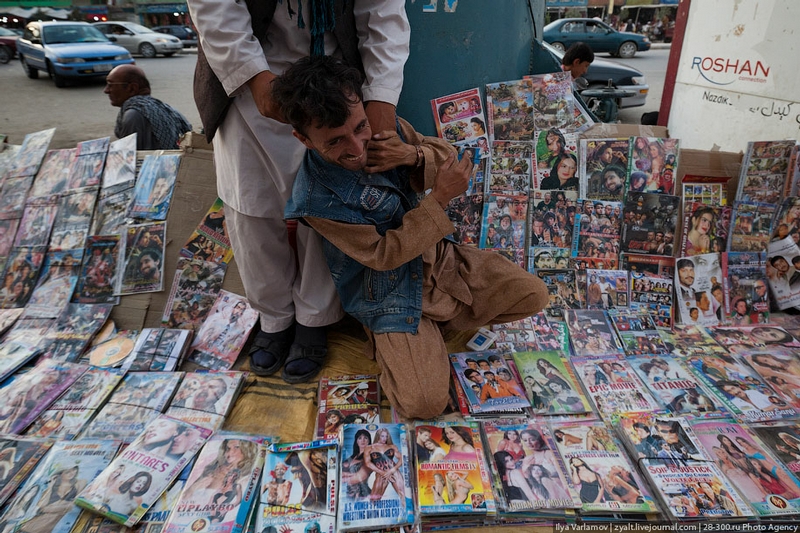
Porn is sold right on the streets.
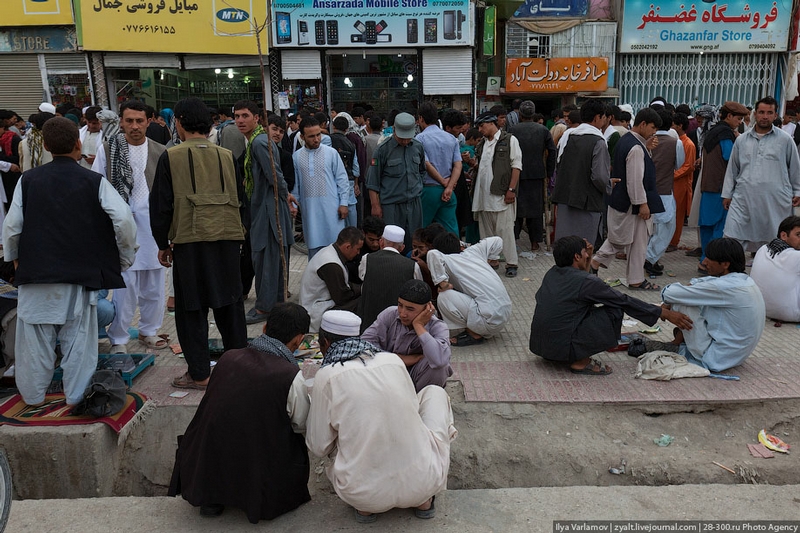
As well as stolen mobile telephones.
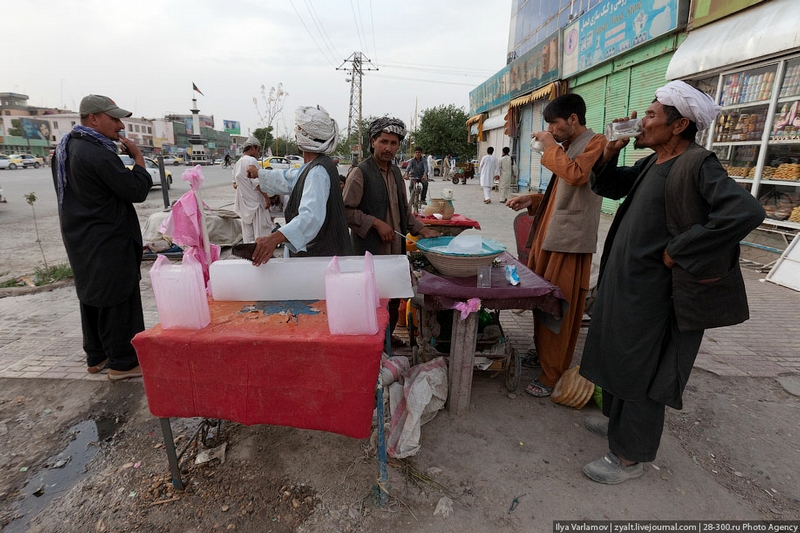
Here you can cut off a piece of ice for yourself.
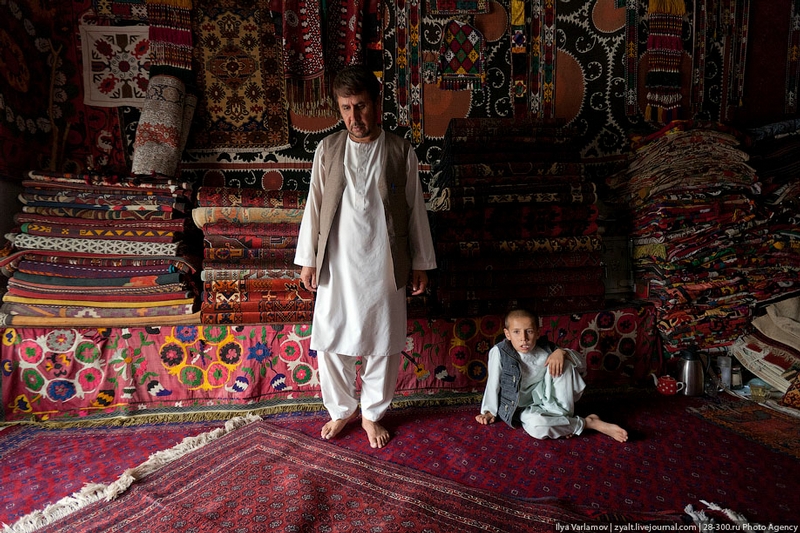
Local wool carpets cost from 100 to 500 dollars. But it will be difficult for you to buy them if you have no cash with yourself. There are no ATMs in the city! To be more precise, there are two of them, but both are broken! The nearest one is located in Kabul.
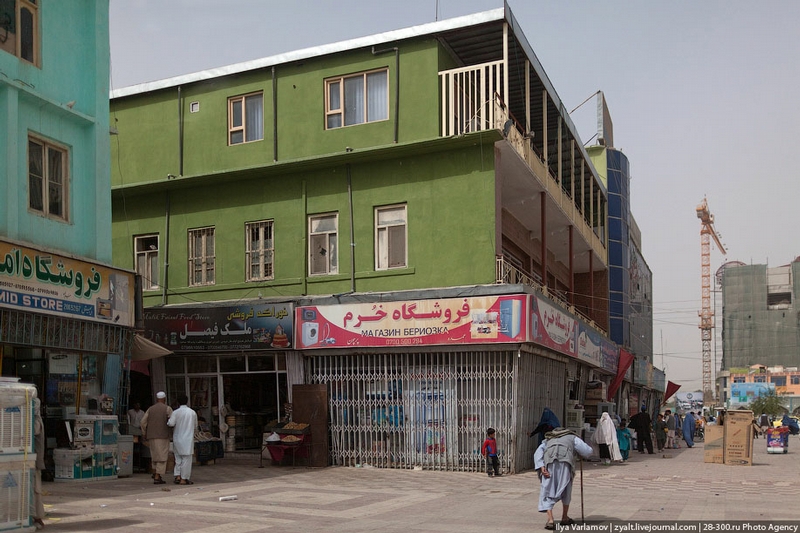
In Mazar-i-Sharif, many people speak Russian, probably because of the close location to Uzbekistan. The Beriozka shop ("birch" from Russian)
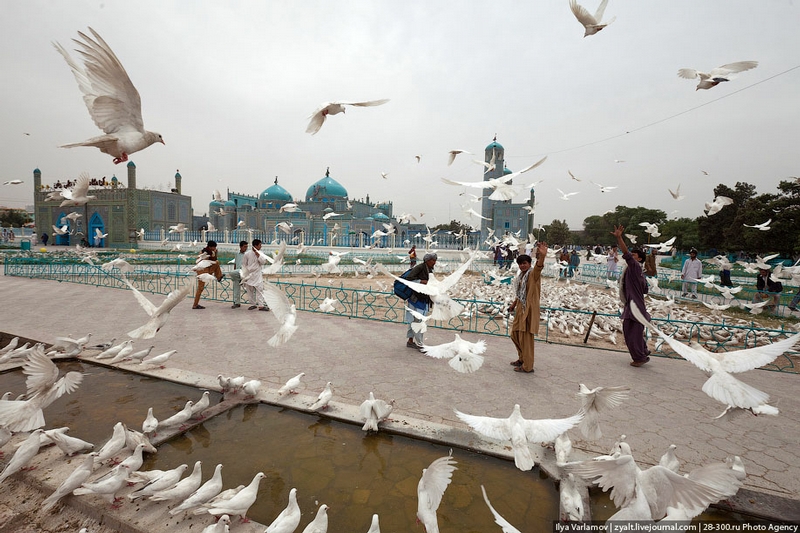
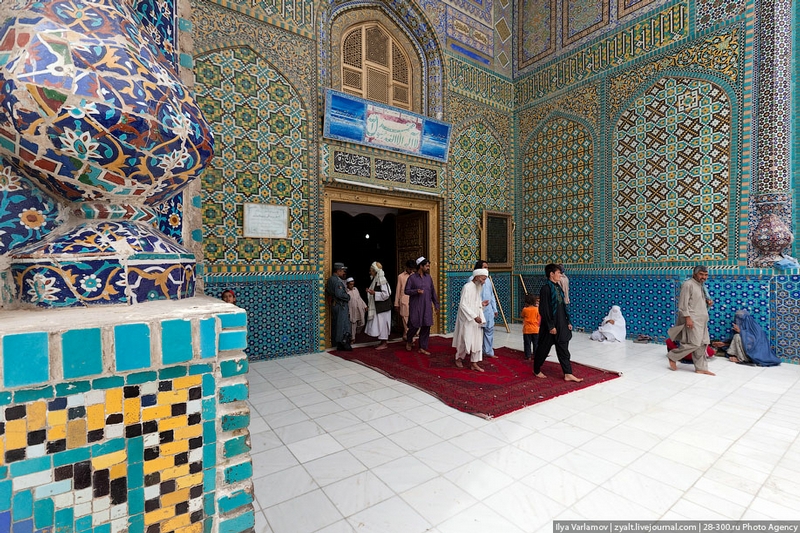
The main attraction of Mazar-i-Sharif is the Blue Mosque. According to local legend, it's the tomb of the Caliph Ali whose body was stolen by kidnappers. For this reason, Mazar-i-Sharif is a place of worship, especially for the Shiites. The real tomb of the Caliph Ali is located in Najaf in Iraq.

It's quite clear here.
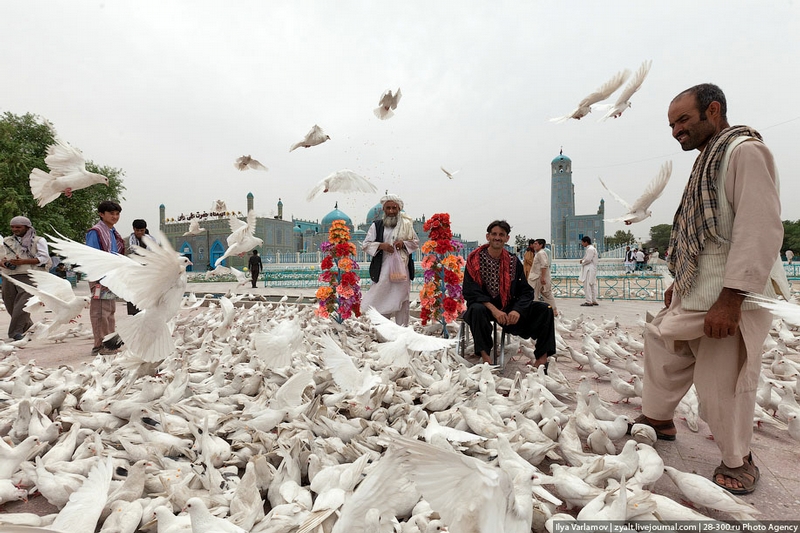
And lots of pigeons.

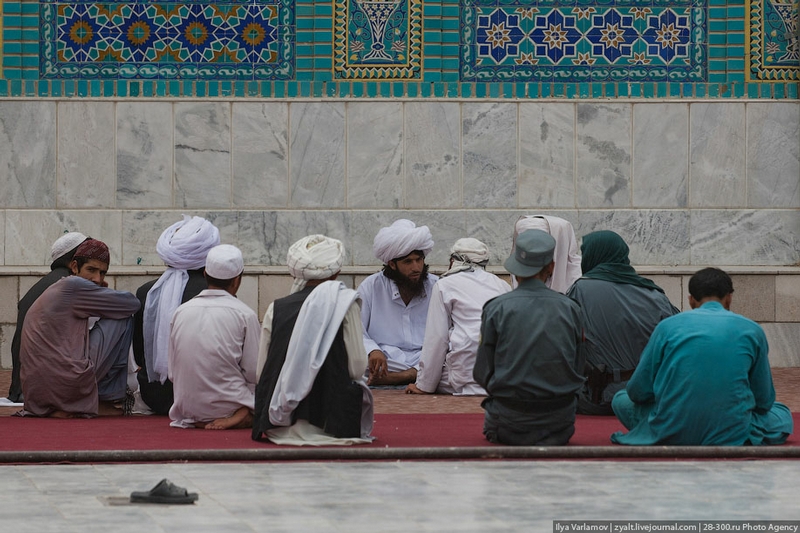
There are very few Taliban in northern Afghanistan and they immediately stand out from the crowd.
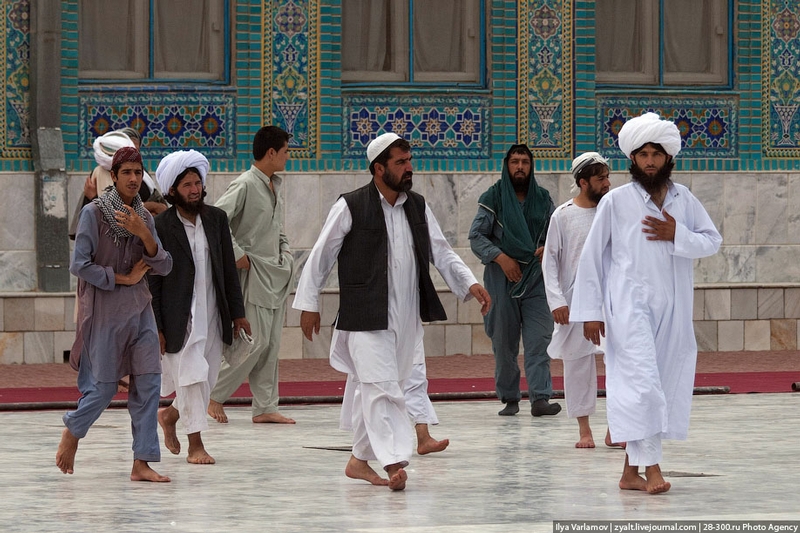
Compare these evil Taliban thugs.

And this kind Uzbek. It's very easy to distinguish them. The Taliban look at you like at a piece of meat in a store.

To photograph women is strictly prohibited. Given that they wear cloaks and their faces are hidden, it is not clear why.

The mosque.


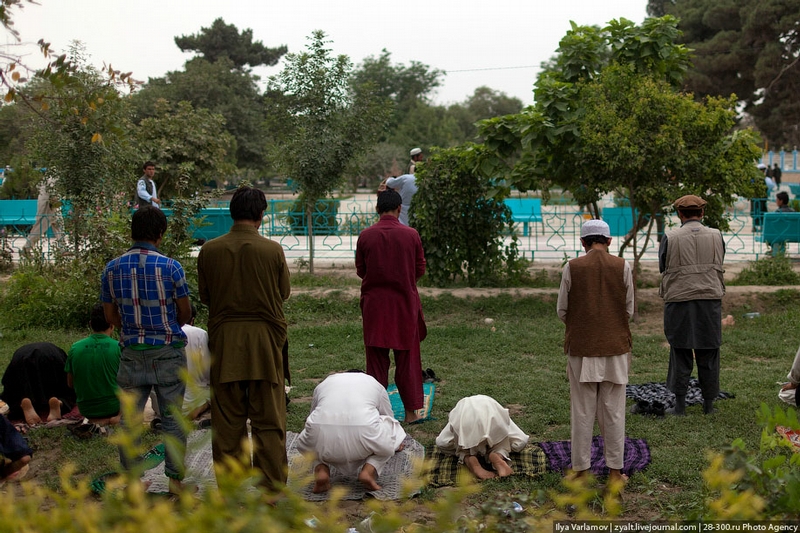
The evening prayer.


The "glasses" of the traffic police.

Afghan people are very hospitable. You don't need to make any special efforts to be invited for dinner.

Local apricots are delicious.

This is the house of a very well-to-do man, the head of the drug enforcement unit in the province of Balkh.

A guest room for three people.

To escape from irritating flies and beetles one can sleep outdoors.

The next destination – Faizabad.

The situation on the road from Mazar-i-Sharif to Faizabad is quite strained. Just yesterday, a suicide bomber exploded himself not far from the mosque. The driver strongly recommends not to stop and not to attract attention, otherwise it can result in unfortunate consequences.
Some people are looking for something…

Sad desert landscapes.

Checkpoints every few kilometers.

On the one hand, everything is very calm and quiet. But on the other, at every step you can see some people with guns who are doing something.

A typical landscape.

Some military men.

The police.

The checkpoint of the Afghan army.

A column of German vehicles.

The Afghan military men always drive pickups with sitting in the body armed men.

The dirigibles controlling the situation from the height.

A piece of the American base. As you can see, they have air conditioning (a luxury in the Afghan backwoods). Judging by the satellite dish, they also have Internet access.

Checkpoints are usually built of such grids filled with sand.


At some posts, soldiers stop cars, force drivers to open a trunk and check their documents.


Another fortress.

Children tear some grass.

The driver allowed to run out of the car for a couple of minutes and make several shots.


The Afghans like to stick the pictures of national heroes to their windshields.

Dinner at some roadside eatery.


A lot of rusty equipment along the roads.

All villages look similar.


The remnants of a tank.

And finally Faizabad. The city is very beautiful and interesting. The travel guide to Afghanistan of 2007 recommends "the best hotel of Faizabad which is located over the river in a picturesque place. If you find a hotel with the best views, be sure to let us know!"
The hotel is really located over the river. At first, it seems to be abandoned: dirty windows, covered with plants walls and the building itself in poor condition. But actually it works. Inside, it looks more like a hostel for illegal migrant workers. The stench is terrible, 10 people live and cook in one room, the bedclothes are never changed. A single toilet for all the guests. A room in this piece of paradise costs $ 65.
In the picture you can see another hotel, less famous but more comfortable which costs $ 50.

It turned out that there was no electricity in the city, so the owner of the hotel had to turn on the generator for about 5 hours daily.

In general, the rural part of Afghanistan is totally different from Kabul and other big cities. Here no one guards hotels, there are no huge fences, restaurants, cafes, ATMs, shops… and it's great! Life has stopped in the Middle Ages and nothing has changed since. People cultivate fields manually. No tractors, no combines, no factories, no electricity.

The city of Faizabad is located on the right bank of the Kokcha. It's historically isolated because of the lack of paved roads.

That's why donkeys are the main means of transport here.

The numerous fields around the city are used for growing wheat, barley, rice and poppy.

Afghanistan has never had especially developed agriculture. Because of the harsh climatic conditions and shortage of land, peasants could barely feed only themselves.


All labor is manual. Though, sometimes animals are used, but as we already said, no tractors and combines.

Wheat is carefully cut with sickles.


The entire process of flour production is also manual.

One of the mountain villages. The richest man in the village owns 4 goats.

The chances of crop failure in such climate are extremely high. The terrain is mountainous and droughts occur more and more often. At the same time, opium poppy is resistant to harsh climatic conditions, that's why its production brings much more profit.


There are fortresses even in the remotest depths of the mountains.


A Tadzhik and a police officer with a big gun drive a tractor.

4 pick-ups follow them. What's on their mind?

It turns out that the police is preparing the operation to destroy poppy fields.

Huge poppy plantations and in the middle of them – crying kids.

Growing poppies is the simplest and easiest way to make money. A poppy field brings a ten times bigger income than a wheat one. Of course, kids are upset as now they have to work 10 times more.

Very often the locals attack police officers during these operations. They are ready for everything not to lose a lucrative business. The fields are often mined.


Up to the 80s-90s poppy production was negligible, but when the Taliban came to power the country became one of the largest producers of heroin.

One of the soldiers turned out to be romantic. Instead of destroying poppy crops he began to collect bouquets.

The heat is terrible, about 40. The work is hard. To somehow brighten up their hard work, the police officers smear a cigarette with poppy milk.

The operation is supported from the air.


Another part of police officers detains all the plantation owners.


Almost all buildings in Afghan cities have special plates which say who built them. It's Americans, Germans, Japanese and Turkish for the most part.

The city has two markets where you can buy wool, woolen clothing, salt, sugar, tea and indigo.


Soviet machinery.


A beautiful girl.


The only filling station in the city.

A shop with ice cream.

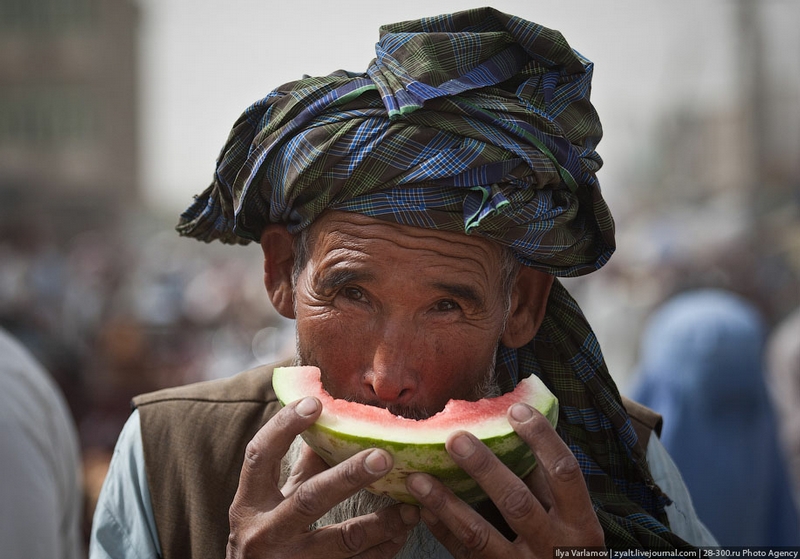
Local watermelons cost about 7 rubles per kilo ($ 0.25), they are very tasty and sweet. Instead of weights the seller uses stones.

The interior of one of the guest houses.

And this is the best hotel of Faizabad.

A nice bus.

Funny tuk-tuks in the city of Kunduz.

The Afghan border.

The border guard hands out immigration cards.

The Tajik border.

220 km to Dushanbe by taxi.

The new residential complex is the highest building in the city.

A lot of trees. It's a pity that the Tajik authorities demolish the historic center. Soon it will become like a provincial Chinese town.


In Tajikistan, it's forbidden to smoke in public places. But it's allowed to drink Jaguar. This cocktail is inexpediently popular among the local population and is considered an "elite drink".

www.keralites.net |


To subscribe send a mail to Keralites-subscribe@yahoogroups.com.
Send your posts to Keralites@yahoogroups.com.
Send your suggestions to Keralites-owner@yahoogroups.com.
To unsubscribe send a mail to Keralites-unsubscribe@yahoogroups.com.
Homepage: www.keralites.net

No comments:
Post a Comment